
The $1,000 Emergency Fund: An 11-Week Diary
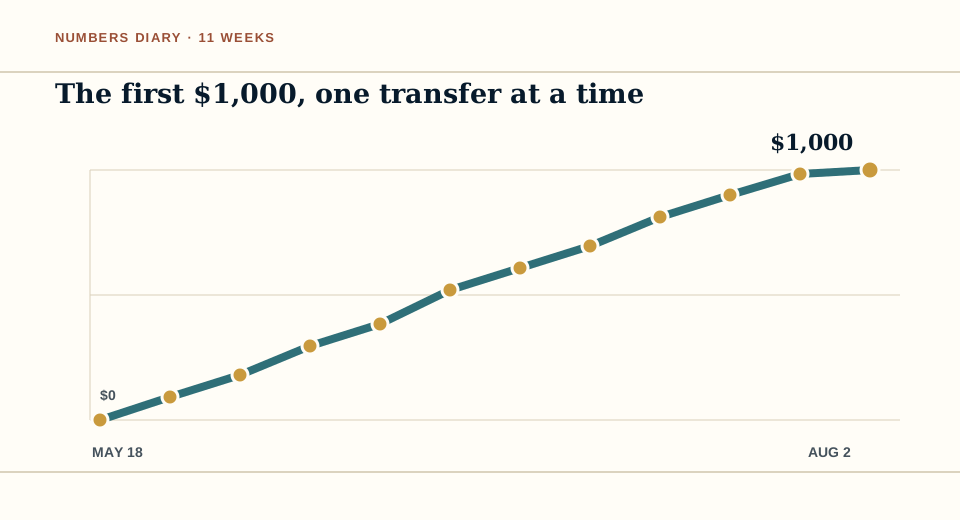
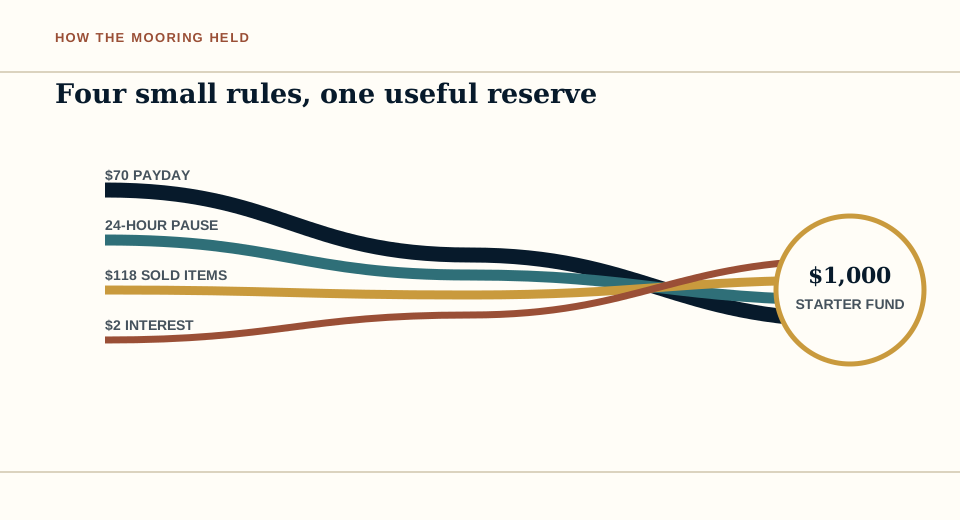
We built a $1,000 starter emergency fund in 11 weeks, from May 18 to August 2, 2026, on $70 automatic payday transfers plus three small boosts. The plan survived a $96 dental bill because we reduced one week’s deposit instead of abandoning the target. Consistency, not austerity, supplied most of the money.
The account began at $0 on Monday, May 18, 2026. We opened a separate insured savings account, named it “Starter Mooring,” and scheduled $70 transfers for the morning after each weekly paycheck. The household’s take-home pay averaged $1,045 a week, so the base transfer represented 6.7%—noticeable, but not large enough to force groceries onto a credit card.
Make the transfer boring
The first two $70 deposits arrived on May 19 and May 26. We moved the automation away from Friday night, when the checking balance looked temporarily generous, to Tuesday morning after posted bills were visible. Balance: $140. The only behavioral rule was a 24-hour pause on unplanned purchases above $40.
Add found money without depending on it
Two more transfers brought the base to $280. Selling an unused chair and headphones added $118 on June 13. We treated those proceeds as a boost, not evidence that the weekly amount could rise forever. Balance: $398.
| Week | Base transfer | Extra | Ending balance | What happened |
|---|---|---|---|---|
| 1–2 | $140 | — | $140 | Automation established |
| 3–4 | $140 | $118 | $398 | Two unused items sold |
| 5 | $70 | — | $468 | Ordinary week |
| 6 | $35 | — | $503 | Dental bill reduced transfer |
| 7–8 | $140 | $64 | $707 | Utility refund deposited |
| 9–10 | $140 | — | $847 | No-spend heroics avoided |
| 11 | $70 | $81 + $2 interest | $1,000 | Final round-up on August 2 |
The setback was part of the plan
Week five added $70. On June 22, a dental visit produced an unexpected $96 balance after insurance. We paid it from checking and reduced that week’s savings transfer to $35. This was not a raid on the new account, and it was not failure. The plan allowed one reduced transfer per month when a necessary expense exceeded $75. Balance: $503.
Use a refund to shorten the crossing
The next two automated transfers added $140. A $64 utility-billing correction posted July 9 and went directly to savings. Because the original overpayment had squeezed an earlier month, spending the refund would have been understandable. Saving it restored the earlier loss. Balance: $707.
Finish without draining checking
Weeks nine and ten brought the balance to $847. On July 28, the final scheduled $70 arrived. We waited until every July bill cleared, then transferred $81 on August 2; $2 of posted interest closed the account at exactly $1,000. We did not round up early and leave checking exposed.
What the first $1,000 is for
This is a starter reserve, not a full income-replacement fund. It covers a typical insurance deductible, a necessary repair, or travel caused by a family emergency. It does not cover predictable annual premiums, holiday gifts, or routine maintenance; those belong in the annual-bill calendar and sinking funds.
We wrote a short use rule on August 2: the expense must be necessary, unplanned, and too large for the relevant monthly category. If all three are true, we can transfer the money without a debate about whether the month was “good.” If one is false, we wait, use a sinking fund, or change the ordinary plan. That sentence is less sophisticated than a dashboard, but it keeps urgency from becoming a synonym for desire.
On August 3, 2026, we changed the weekly transfer from $70 to $35. The next target is one month of essential expenses—$2,780—by July 2027. A slower second stage leaves room for retirement contributions and known bills. The separate account remains accessible within one business day, has no debit card, and is not connected to routine checkout apps.
Readers starting with variable income can transfer a percentage after each payment rather than a fixed $70. Our budgeting-system guide covers irregular pay, while the glossary separates emergency funds from sinking funds. The useful rule is simple: choose an amount small enough to repeat and a destination inconvenient enough not to browse.
Frequently asked questions
Is $1,000 enough for an emergency fund in 2026?
It is a starter target, not a finish line. One thousand dollars can keep a common repair or deductible off a credit card, then you can build toward one month and eventually several months of essential expenses.
Where should a starter emergency fund be kept?
Use an insured, liquid savings account that can transfer money within a day or two. Separate it from daily checking, avoid investment risk for this short-term job, and skip a debit card if easy access encourages casual spending.
What if I miss a weekly deposit?
Resume with the next realistic deposit; do not double it automatically and create a cash-flow problem. Our diary used a planned reduced-transfer rule, which preserved the habit during an expensive week.