
Annual Bills: A 12-Month Renegotiation Calendar
Annual bills become manageable when the review date comes before the renewal date. This 12-month calendar puts insurance quotes 45 days early, subscription audits in January and December, tax preparation in March, and utility checks before peak seasons. Add your actual renewals now; renegotiate one category each month instead of everything at once.
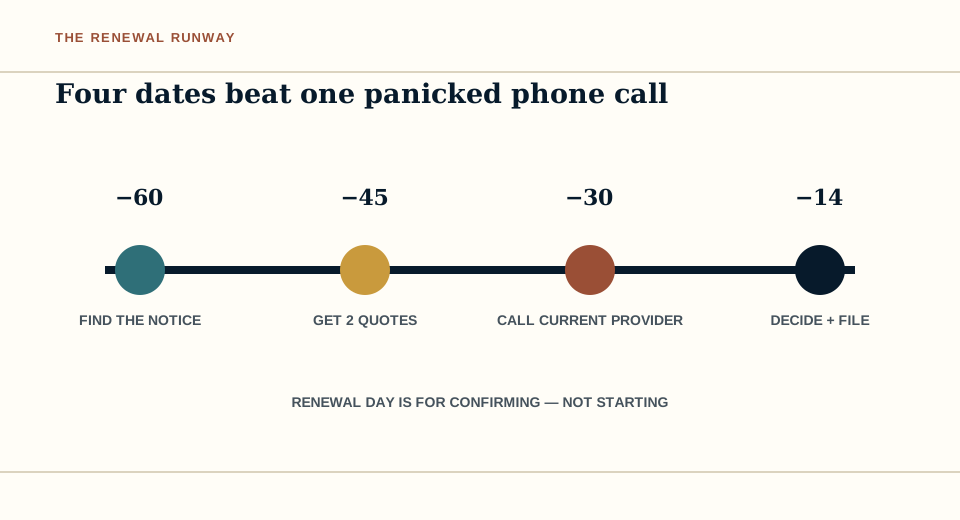
The expensive part of an annual bill is often not the price; it is discovering the price after the cancellation window closed. We built this calendar on August 1, 2026 by reading renewal notices, policy declarations, subscription receipts, and the prior 12 months of statements. Every contract received two dates: the actual renewal and a review 30 to 60 days earlier.
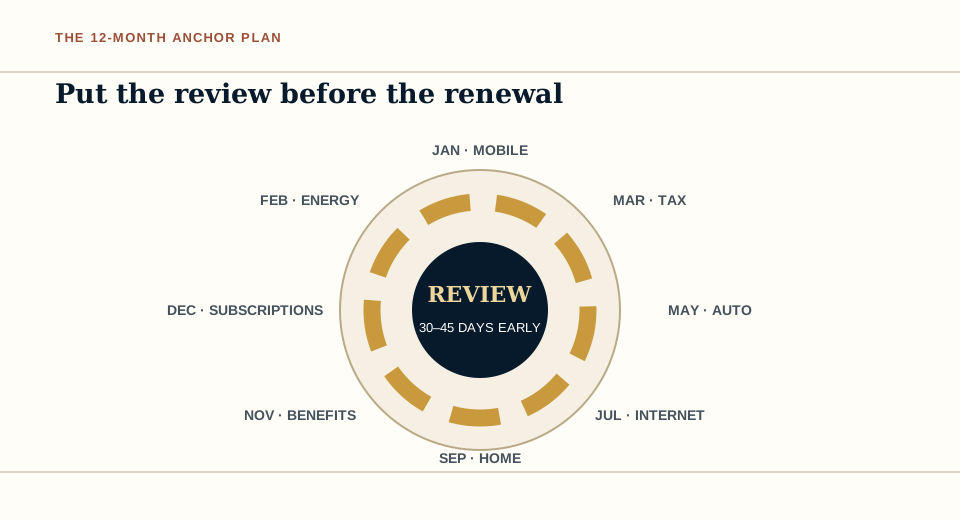
January through March: clean the chart
January · subscriptions and mobile
Export the December statement on January 5, 2026. Cancel duplicates, price a lower mobile-data tier, and record every annual renewal. We found $204 a year across two unused plans.
February · energy and heating
Compare kilowatt-hours or fuel use, not only dollars. On February 12, inspect supplier terms, equal-payment plans, insulation rebates, and the thermostat schedule before winter ends.
March · taxes and records
By March 15, collect income forms, deductible receipts, estimated-tax payments, and prior returns. Filing earlier than the deadline creates time to correct errors and plan any balance due without a surprise transfer.
April · banking and debt
On April 2, list account fees, card annual fees, loan rates, and savings yield. Ask for a fee waiver only with a credible alternative ready. Never close an old card casually if credit history matters.
| Month | Primary review | Lead time | Document to find | 2026 action |
|---|---|---|---|---|
| January | Subscriptions, mobile | Before next charge | December statement | Cancel two unused plans |
| February | Energy | Before seasonal change | 12 months of usage | Compare usage and tariff |
| March | Tax records | 30+ days | Income forms, receipts | Prepare by March 15 |
| April | Banking and debt | 30 days | Fee and rate schedule | Request one waiver |
| May | Auto insurance | 45 days | Declarations page | Get two like-for-like quotes |
| June | Travel, memberships | 60 days | Renewal emails | Check benefit use |
| July | Internet | 30 days | Latest bill | Price current-speed rivals |
| August | School, care, transit | Before enrollment | Program fee sheet | Choose the full-year option |
| September | Home/renters insurance | 45 days | Coverage summary | Update replacement values |
| October | Health selections | Before open enrollment | Plan comparison | Model total annual cost |
| November | Benefits and giving | Before year-end | Employer portal | Use expiring benefits |
| December | All renewals | 30 days | Full statement search | Set 2027 reminders |
May through August: insure and connect
Auto insurance gets May because our policy renews June 28, 2026. On May 14 we requested two quotes using identical liability limits, deductibles, drivers, and annual mileage. The lowest quote was $186 cheaper, but weaker rental coverage erased much of the value. Our current insurer reduced the six-month premium by $112 after we presented the comparable offer.
June is for memberships and travel protections before summer reservations become nonrefundable. July handles internet: record the real download speed, price two competitors, and ask the current provider for the total price after promotional months. August captures school, childcare, and commuter programs before enrollment windows close.
September through December: protect next year
September reviews homeowners or renters coverage. Update replacement values, valuable-item limits, deductibles, and liability—not just the premium. October belongs to health-plan selection: compare premiums plus expected deductibles, copays, prescriptions, and employer contributions. The cheapest paycheck deduction can be the costliest annual plan.
In November, inspect benefits that expire on December 31, 2026 and schedule eligible care without inventing wasteful spending. December is the master sweep. Search statements for “annual,” “renewal,” and repeated merchant names; put every 2027 notice into the calendar. Our six-month spending map explains how we separate renewals from ordinary monthly flow.
Negotiate the coverage, not merely the price
Ask three questions: What changed since last year? What does a comparable provider charge for the same terms? Which feature can change without creating unacceptable risk? A higher insurance deductible may cut premium but belongs beside a funded deductible. A cheaper internet plan is useful only if its equipment, installation, and post-promotion fees are included.
When a bill cannot be reduced, the calendar still earns its place. Divide the known annual amount by the pay periods remaining and automate it into a sinking fund. The DimeHarbor glossary explains that tool, and our app-selection guide identifies systems that handle irregular bills. Renegotiation is one outcome; removing surprise is the larger win.
Frequently asked questions
How early should I renegotiate an annual bill?
Start 30 to 60 days before renewal. Insurance often needs 45 days for comparable quotes; subscriptions may need only the notice period. Put the review date—not just the charge date—on your calendar.
What if a provider will not lower the price?
Ask about a different tier, deductible, payment schedule, loyalty discount, or fee waiver, then compare the complete competing offer. If switching is not worthwhile, fund the known bill gradually so the renewal is not a cash-flow emergency.
Should every annual bill be paid yearly?
No. Annual payment can save money, but only if the discount is worthwhile and the cash is already reserved. Keep monthly payment when an annual charge would drain emergency savings or create card debt.