
PocketGuard’s In My Pocket Math, Stress-Tested
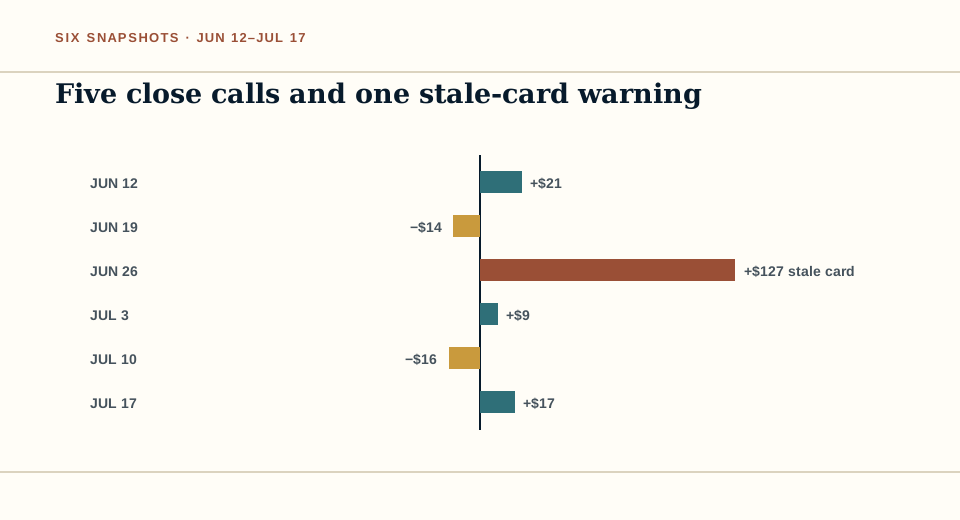
PocketGuard’s “In My Pocket” number landed within $21 of our manual statement math on five of six 2026 test dates. The one $127 miss came from a stale credit-card connection, not faulty subtraction. The feature is genuinely useful when every account is current and recurring bills are complete; otherwise, precision can look safer than it is.
Our 42-day PocketGuard review praised the feature because it answers a practical question: after bills, planned spending, and goals, what remains available? For this stress test, we ignored the dashboard’s authority and rebuilt that answer from bank and card statements on six Fridays from June 12 through July 17, 2026.
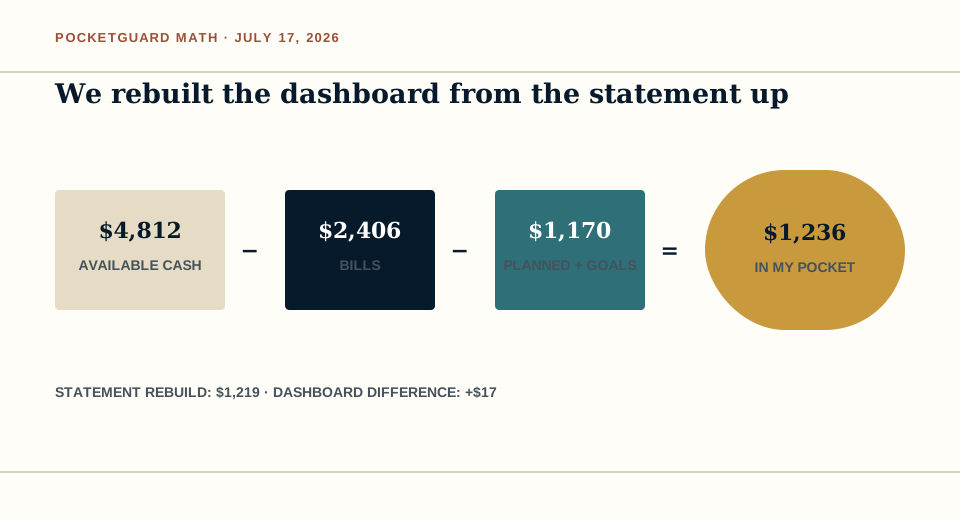
The formula is simple; the inputs are not
That description is directionally correct, but a household must decide which accounts are available, how far ahead bills should count, and whether pending card activity already reduced spendable cash. PocketGuard makes those choices through account settings, detected recurring bills, category budgets, and the selected time horizon. The arithmetic is transparent only after the inputs are audited.
We linked one checking account, one savings account, and two credit cards. We excluded $8,400 of long-term savings from available cash, included six recurring bills, and kept a $250 monthly emergency-fund contribution. On every test date we downloaded posted activity, recorded pending transactions separately, and rebuilt the number in a spreadsheet before opening PocketGuard.
| Date | PocketGuard | Manual rebuild | Difference | Primary cause |
|---|---|---|---|---|
| June 12 | $1,084 | $1,063 | +$21 | Two pending card purchases |
| June 19 | $742 | $756 | −$14 | Bill posted one day early |
| June 26 | $1,391 | $1,264 | +$127 | Credit card stale for 19 hours |
| July 3 | $918 | $909 | +$9 | Pending fuel purchase |
| July 10 | $566 | $582 | −$16 | Goal transfer already posted |
| July 17 | $1,236 | $1,219 | +$17 | Transaction timing |
Five results were decision-grade
Differences of $9 to $21 did not change an ordinary spending decision in this household. They were 0.7% to 2.5% of the displayed amount and reflected the familiar gap between pending, posted, and synchronized activity. We still would not spend down to the last displayed dollar. A $75 floor stayed in checking as a timing reserve.
The June 26 result was different. One credit card had not refreshed for 19 hours, leaving $127 of posted activity outside the calculation. PocketGuard showed $1,391 when the reconstructed figure was $1,264. The connection screen disclosed the older update time, but the main number did not make that warning prominent enough. After refresh, the gap fell to $12.
Recurring bills deserve a monthly roll call
PocketGuard detected five of six recurring obligations. The missed item was a $119 annual software renewal scheduled for July 22, 2026. Because it had not appeared during the recent monthly pattern, we added it manually on June 27. Without that correction, the July safe-to-spend figure would have been overstated by the full $119.
Variable utilities created a smaller problem. The dashboard estimated electricity at $142 from prior bills; the July statement was $168 during a hot spell. We changed the planned amount after the bill issued. Anyone using the number before a seasonal utility arrives should budget the high end of a recent range rather than last month’s exact charge.
Our safe operating rules
We would use In My Pocket for restaurant plans, household purchases, and the timing of an extra debt payment. We would not use it alone before committing to travel, a new subscription, or spending most of the displayed amount. Before a decision above $250, we refreshed all accounts, reviewed bills due through the next paycheck, and checked card pending activity.
The feature passed our stress test because the normal errors were small, explainable, and visible after inspection. It did not become a bank guarantee. PocketGuard still leads our 2026 app ranking, but its most useful number should be read as a well-maintained estimate. Our PocketGuard and Goodbudget comparison may suit readers who prefer allocation before automation.
Testing note: statement figures were de-identified and frozen at the same time on each test date. Pending activity was recorded but not treated as posted. PocketGuard did not review or approve this article.
Frequently asked questions
How does PocketGuard calculate In My Pocket?
It starts with cash in included accounts and subtracts upcoming bills, planned budget spending, and savings goals for the selected period. Account settings, recurring-bill detection, transaction timing, and connection freshness all affect the result.
Can I trust PocketGuard’s safe-to-spend number?
Use it as a maintained estimate, not a guarantee. In our six snapshots it was close five times, but a stale card created a $127 overstatement. Keep a checking buffer and refresh accounts before a large decision.
Why is my In My Pocket amount wrong?
Check excluded or duplicated accounts, stale connections, missing recurring bills, pending transactions, goal transfers, and the time period selected. Reconcile one statement at a time before changing multiple categories.